
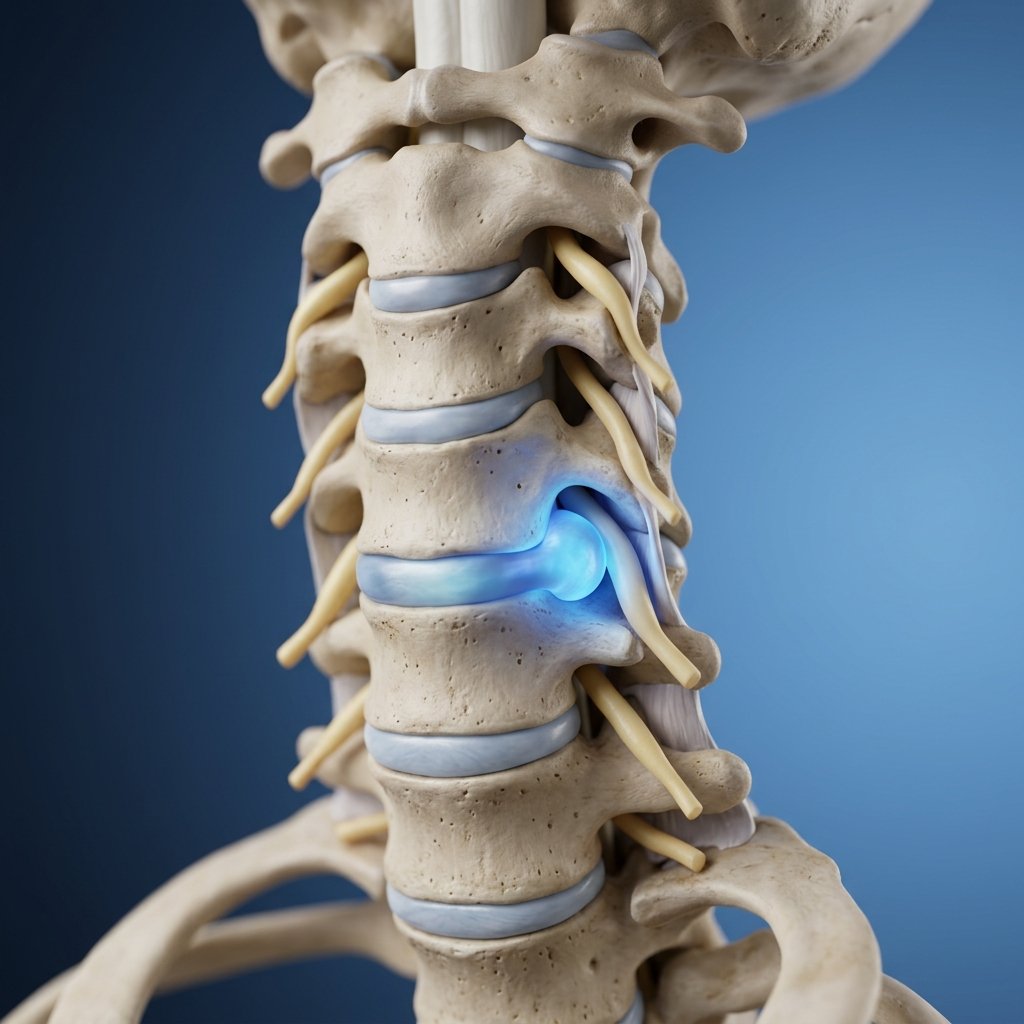
Understanding Cervical Slipped Disc
A cervical slipped disc occurs when the cushioning disc between the vertebrae in the neck (cervical spine) ruptures or herniates. This can lead to compression of the spinal nerves or the spinal cord itself, a condition known as cervical myelopathy.
Because the cervical spine is a relatively small area, even a minor disc herniation can cause significant symptoms, including pain that radiates into the shoulders and arms, as well as potential loss of coordination in the hands. Expert surgical intervention is often required to relieve pressure and protect the nervous system.
Common Symptoms
- Sharp or dull pain in the neck that travels down to the hands.
- Weakness or "clumsiness" in the hands and fingers.
- Numbness, tingling, or a burning sensation in the arms.
- Difficulty with balance, fine movements, or changes in handwriting.
Specialized Treatment Options
Dr. Shrey Binyala is an expert in treating complex cervical conditions using advanced surgical techniques that focus on nerve decompression and spinal stabilization.
ACDF Surgery
Anterior Cervical Discectomy and Fusion is a standard procedure to remove the damaged disc and stabilize the neck, relieving nerve pressure from the front.
Cervical Disc Replacement
A modern motion-preserving surgery where the natural disc is replaced with an artificial one, maintaining the natural flexibility of the neck.
Why Timely treatment Matters?
Cervical conditions can progress quickly if left untreated. Choosing early intervention with Dr. Binyala offers essential benefits:
Preserve Hand Function
By relieving pressure on the spinal cord, we prevent the progression of hand weakness and loss of fine motor coordination.
Eliminate Radiating Pain
Targeted decompression stops the shooting pain and burning sensations that travel from the neck to your fingertips.
Spinal Cord Protection
Early intervention in cases of Myelopathy is crucial to prevent permanent injury to the spinal cord and ensure long-term mobility.