
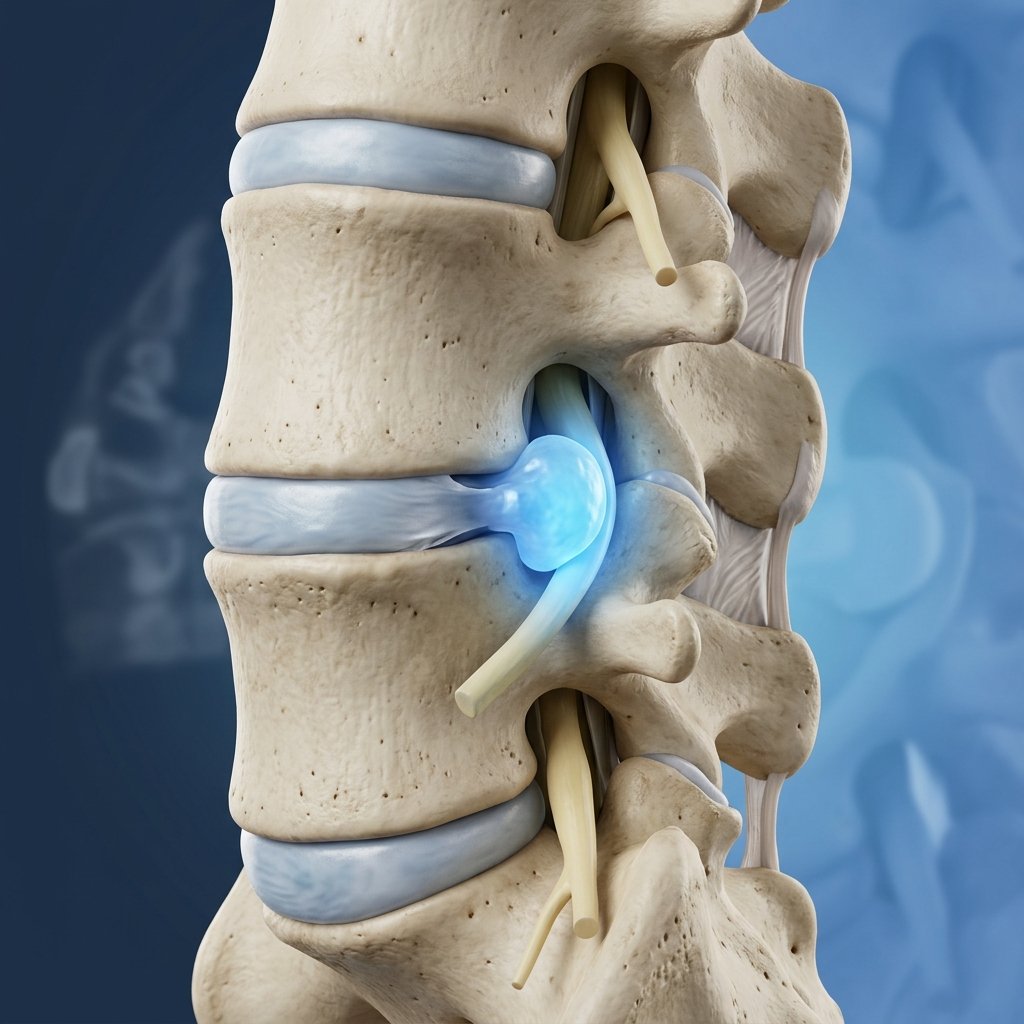
Understanding Slipped Disc
A slipped disc, medically known as a herniated or prolapsed disc, occurs when the soft, jelly-like center of a spinal disc pushes through a tear in the tougher outer casing. This displacement can irritate nearby nerves and result in pain, numbness, or weakness in an arm or leg.
While slipped discs can occur anywhere in the spine, they are most common in the lower back (lumbar spine). Many people have no symptoms from a herniated disc, but for those who do, the discomfort can be debilitating and significantly impact daily life.
Common Symptoms
- Sharp pain that radiates to the buttocks and legs (Sciatica).
- Numbness or tingling sensation in the affected limb.
- Muscle weakness that can affect your ability to lift or hold items.
- Pain that intensifies with coughing, sneezing, or sitting for long periods.
Advanced Treatment Options
Dr. Shrey Binyala offers a comprehensive range of treatments for herniated discs, ranging from conservative non-surgical care to advanced minimally invasive surgical procedures tailored to your specific condition.
Conservative Care
Most slipped discs improve with non-surgical treatments like specialized physical therapy, pain-relieving medications, and activity modification.
Microscopic Discectomy
A precision surgical technique used to remove the herniated portion of the disc, relieving nerve pressure with minimal disruption to surrounding tissues.
Benefits of Timely Treatment
Proper management of a slipped disc is essential to prevent chronic pain and permanent nerve damage. Expert care provides multiple benefits:
Effective Pain Relief
Targeted treatments significantly reduce local and radiating pain, allowing you to resume your daily routine comfortably.
Restored Spinal Mobility
Treatment and rehabilitation help restore the natural range of motion in your spine, reducing stiffness and improving core strength.
Nerve Regeneration
By relieving pressure on the spinal nerves, we help prevent permanent sensory loss and promote the recovery of muscle strength.