
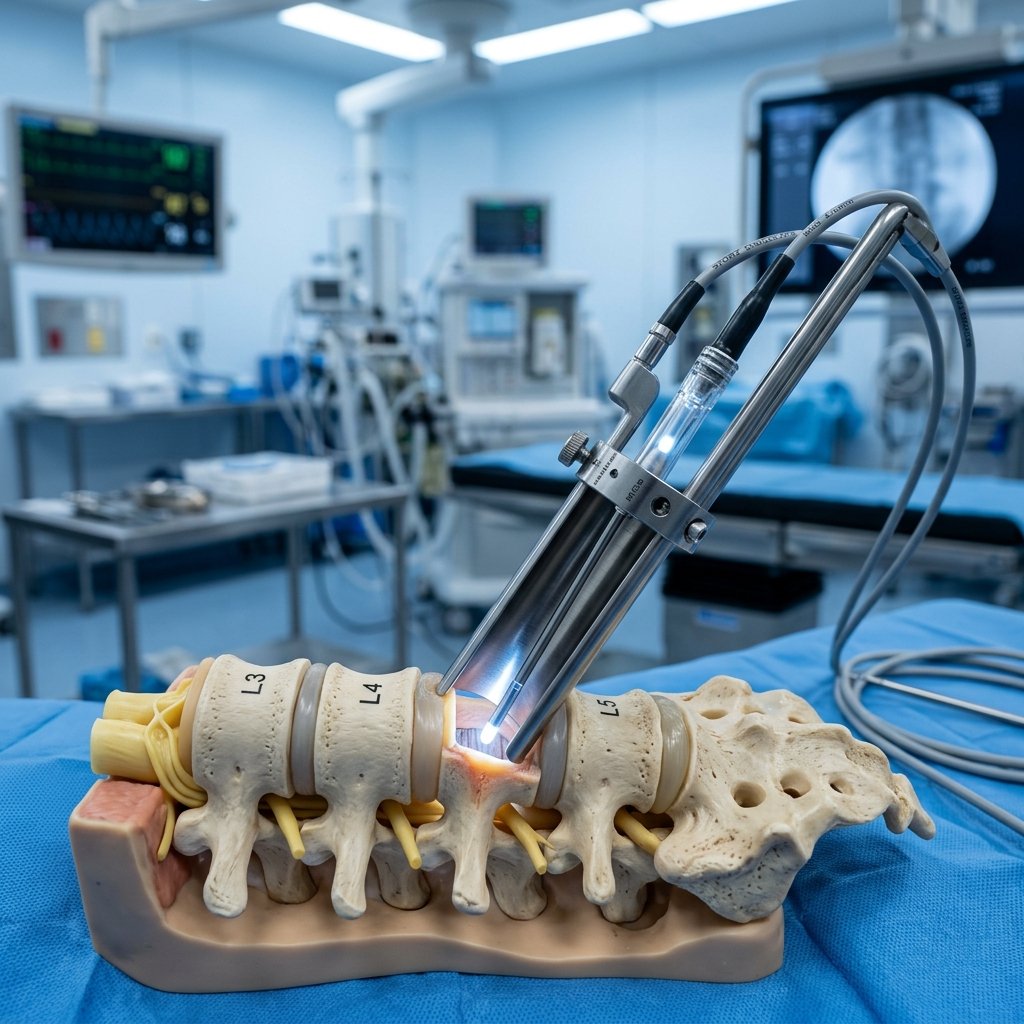
Understanding Minimally Invasive Spine Surgery (MISS)
Minimally Invasive Spine Surgery (MISS) is a revolutionary surgical philosophy designed to achieve the same therapeutic goals as traditional open surgery while minimizing trauma to the body. By utilizing advanced technology and specialized techniques, surgeons can treat spinal disorders through much smaller incisions.
The core of MISS lies in tissue preservation. Instead of cutting through large muscle groups, we use muscle-dilating retractors to gently push muscles aside, allowing access to the spine with minimal disruption to the body's natural architecture and blood supply.
Conditions Treated with MISS
- Degenerative Disc Disease causing chronic pain.
- Lumbar Spinal Stenosis (narrowing of the spinal canal).
- Spondylolisthesis and spinal instability.
- Spinal infections and certain types of spinal tumors.
Expert Surgical Techniques
Dr. Shrey Binyala utilizes high-powered microscopes and state-of-the-art navigation systems to perform complex procedures with unrivaled accuracy.
Microscopic Decompression
A precision-guided procedure to remove bone spurs or thickened ligaments that are compressing spinal nerves, performed through a tiny portal.
MIS Spinal Fusion
Stabilizing the spine using percutaneous screws and rods through small incisions, resulting in less blood loss and a faster recovery compared to open fusion.
Why Choose MISS?
Choosing a minimally invasive approach offers several significant advantages for your recovery journey:
Reduced Hospital Stay
Many MISS procedures are performed as outpatient or short-stay surgeries, allowing you to return to the comfort of your home sooner.
Significantly Less Pain
By avoiding large muscle incisions, post-operative pain is substantially reduced, decreasing the need for heavy pain medications.
Lower Complication Risk
Smaller incisions mean a significantly lower risk of surgical site infections and reduced scarring both internally and externally.