
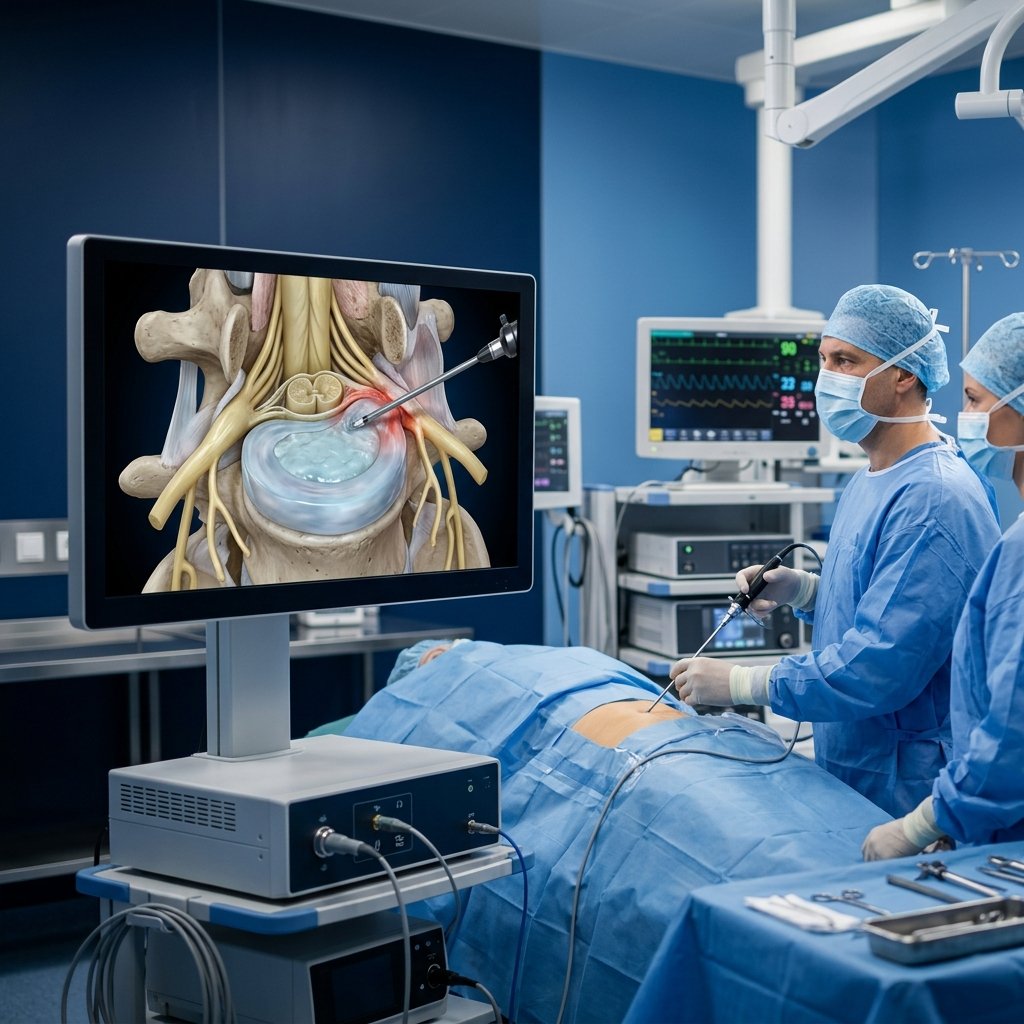
Understanding Endoscopic Spine Surgery
Endoscopic Spine Surgery (ESS) represents the pinnacle of minimally invasive spinal care. Using an ultra-thin endoscope equipped with a high-definition camera, surgeons can navigate the spine through tiny "keyhole" incisions, treating complex conditions with unprecedented precision.
Unlike traditional open surgery, ESS does not require extensive muscle detachment or bone removal. This preserves the natural stability of the spine, significantly reduces post-operative pain, and allows most patients to return home on the same day as their procedure.
Who Benefits from ESS?
- Patients with herniated discs causing persistent nerve pain.
- Individuals suffering from spinal stenosis (narrowing of the spinal canal).
- Those who have experienced limited success with non-surgical treatments.
- Active individuals seeking the fastest possible return to work and sports.
Expert Surgical Options
Dr. Shrey Binyala specializes in the latest endoscopic techniques, ensuring that each patient receives the most advanced care available today.
Endoscopic Discectomy
A targeted approach to remove a herniated disc segment through a 7mm incision, relieving nerve compression with minimal scar tissue formation.
Foraminotomy
Widening the nerve exit portals in the spine using endoscopic tools to treat conditions like pinched nerves and radicular pain.
Benefits of Endoscopic Care
Choosing endoscopic surgery means choosing a faster, safer, and less painful path to recovery:
Minimal Physical Impact
Tiny incisions lead to less blood loss, lower risk of infection, and minimal disruption to healthy back muscles.
Outpatient Procedure
Most patients are up and walking within hours of surgery and can recover in the comfort of their own home.
Long-Term Stability
By preserving spinal ligaments and bone structure, ESS maintains the natural integrity of your back, reducing the risk of adjacent level disease.